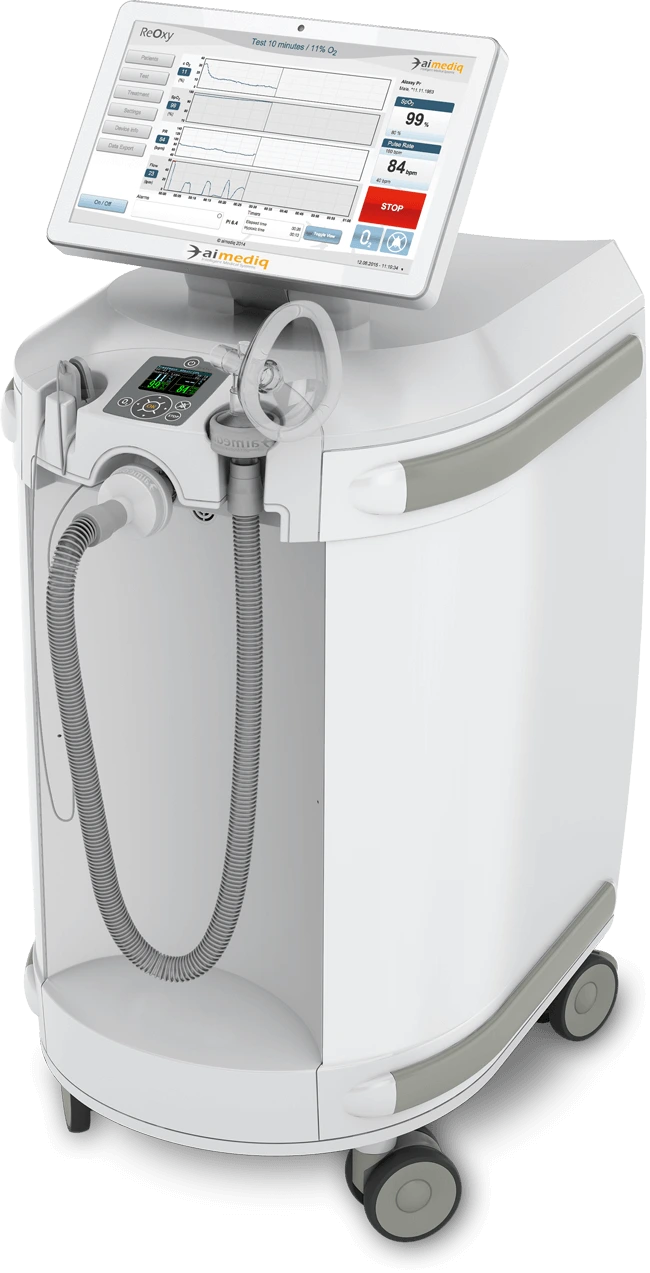
A method using alternating breathing phases.
Describes a therapeutic approach; the term alone does not identify a specific device or protocol.
A medical system for individually monitored sessions.
Combines gas delivery, monitoring and control as described in the model documentation.
ReOxy or IHHT? The short answer
ReOxy and IHHT are not interchangeable terms. ReOxy is a medical device which, according to the manufacturer’s documentation, is designed to deliver individually monitored respiratory procedures. IHHT (intermittent hypoxic-hyperoxic training) is the name of a method that alternates breathing mixtures with reduced and increased oxygen content.
In short: IHHT describes the method; ReOxy is a specific system designed to deliver and monitor it. The term IHHT alone does not mean a clinic uses ReOxy or that every IHHT protocol is identical.
What happens during a ReOxy session?
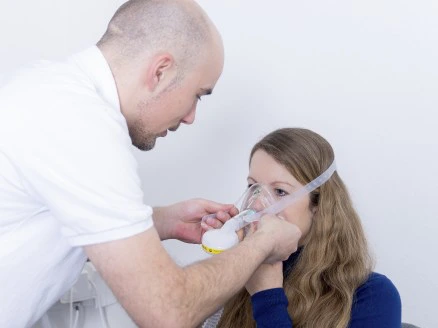
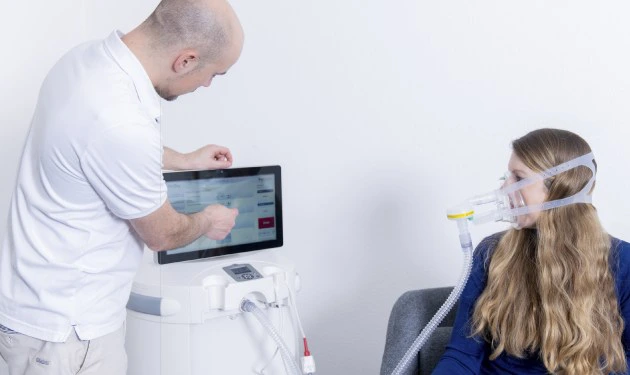
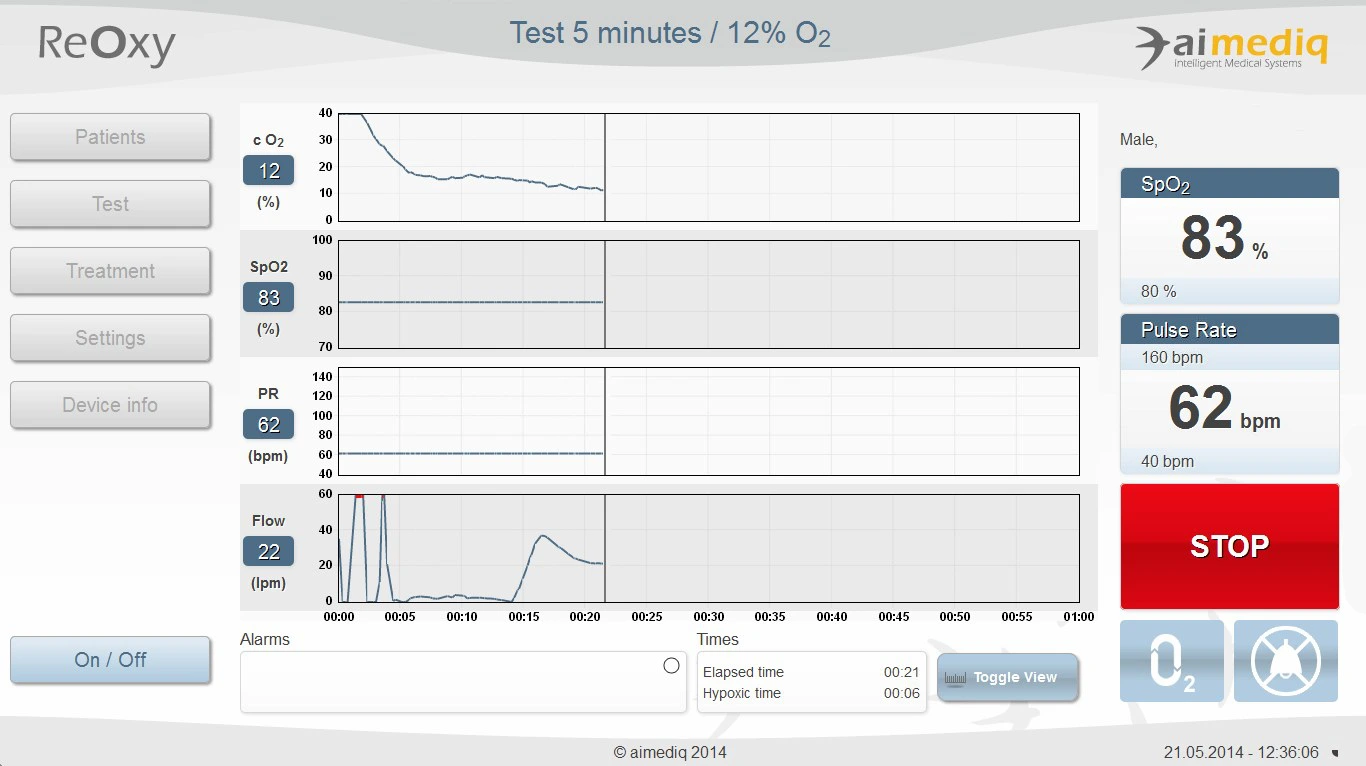
The manufacturer’s general description starts with selecting or entering patient details and carrying out a preliminary test. Staff fit the mask and sensor, confirm the resulting parameters and alarm limits, then supervise the session. The system supplies mixtures with reduced and increased oxygen content in turn, while monitoring SpO₂, pulse and oxygen concentration in the delivered gas.
Exact duration, cycle count, parameters, patient assessment and procedures must follow the current instructions for the specific model and the physician’s decision. A general online description does not replace training or a clinical protocol.
What does SpO₂ monitoring show — and what does it not show?
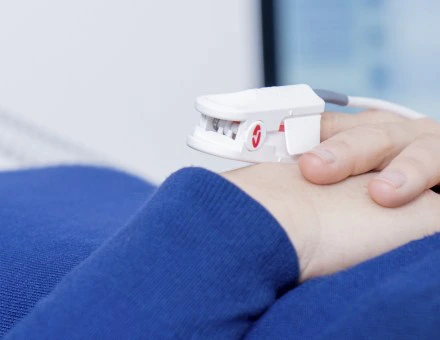
A pulse oximeter measures peripheral blood oxygen saturation (SpO₂) and pulse rate. In a monitored device, these readings help staff observe a response during the procedure and, according to the ReOxy description, contribute to the feedback used to control phases.
An SpO₂ reading alone is not a complete health assessment, diagnosis or guarantee of safety. It may need to be interpreted alongside the patient and other clinical information. Alarms and automatic functions are safeguards, but they do not replace staff, patient assessment or the instructions for use.
Hypoxia and hyperoxia: phase names, not a ready-made protocol
The hypoxic phase uses a mixture containing less oxygen than ambient air. During the hyperoxic phase, a mixture with a higher oxygen concentration is supplied. Manufacturer materials show percentage ranges for these mixtures; figures vary across pages and documents, so check the source and device version.
These figures are not patient settings and should not be copied outside a procedure conducted according to the instructions. Parameters are set individually in a clinical context.
What does IHHT research actually tell us?
Studies cover different populations, aims and protocols. A 2022 systematic review summarised eight human studies available through September 2021; its authors noted methodological variation and the need for further well-designed research. A later pilot study in long-COVID rehabilitation included 145 participants; it was open-label and non-randomised, and IHHT formed part of a broader rehabilitation programme.
These are examples of IHHT research in specific contexts, not proof of effectiveness for every population, protocol or ReOxy use. Findings should not be automatically transferred to other groups or framed as guaranteed benefits. First check who was studied, what the intervention was compared with and which limitations the authors reported.
Five questions to guide your reading of a study
1. Who took part, and what was their health status? 2. Which protocol was used, and was ReOxy the device studied? 3. What was IHHT compared with, and was group allocation randomised? 4. Did the authors report between-group differences, uncertainty and adverse events? 5. Is the source a full research paper, an abstract or manufacturer material?
These questions help distinguish the result of one study from a broad marketing promise. Read the publication rather than relying on a headline, abstract or chart alone.
Reliable information starts with the right source
Check the current instructions for use and documentation for the specific model when verifying its features and intended purpose. Qualified healthcare professionals make assessment and procedural decisions within their professional scope. This educational article is not medical advice, operating instructions or a recommendation to use the device.
Pay attention to how medical devices are promoted. Information should be consistent with the device’s intended purpose and documentation; avoid attributing effects that are not supported by appropriate evidence.
The key distinction in one sentence
IHHT is a method; ReOxy is a device for delivering it with monitoring — while clinical relevance depends on the documentation, patient, protocol and quality of evidence. To explore the technology from an institution’s perspective, continue to the related pages about ReOxy, the IHHT method and research.
Sources and further reading
1. www.aimediq.com / general-description2. www.aimediq.com / srt-technology3. www.aimediq.com / reoxy-treatment4. pubmed.ncbi.nlm.nih.gov / 356392115. pubmed.ncbi.nlm.nih.gov / 395599206. eur-lex.europa.eu / oj7. www.gov.pl / reklama-wyrobow-medycznychInformation only. This does not replace the instructions for use or individual medical advice.